


Bill Volz's Westchester

Blog / Jeep Lineup

2025 Jeep Gladiator vs. Ford Ranger: Which Midsize Truck Fits Your Lifestyle?

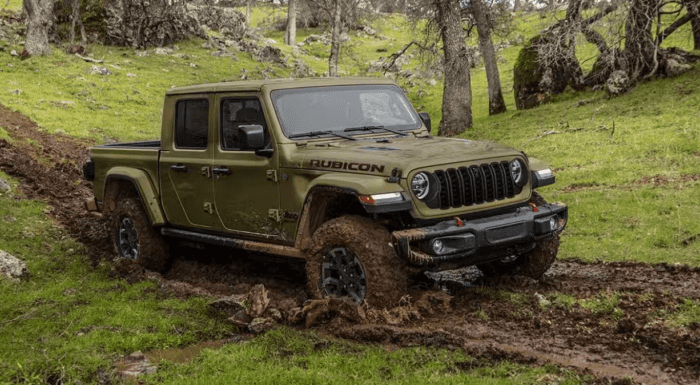
Green 2025 Jeep Gladiator Rubicon driving in mud

Picking between the 2025 Jeep Gladiator and Ford Ranger is about finding your perfect adventure vehicle in Westchester County. These two midsize pickups are capable trucks, but they cater to different lifestyles. Whether you need something to haul your kayaks up to Bear Mountain, are tired of white-knuckle driving through February snowstorms, or you just want a solid weekend project partner, our team at Bill Volz Westchester Chrysler Dodge Jeep Ram (CDJR) can take you through all the important details to help you make your choice.

2025 Jeep Gladiator Overview: The Only Open-Air Pickup

The 2025 Jeep Gladiator sits in a class all its own — in fact, it's the only pickup truck that lets you pop the top and doors off. Based on the iconic Wrangler, this truck merges powerful hauling capability with open-top fun. Every model boasts a 3.6-liter Pentastar V-6 producing 285 horsepower and 260 lb-ft of torque. Jeep removed the manual option for 2025, so you'll find an eight-speed automatic transmission on all models.

You can tow up to 7,700 pounds and carry a payload of up to 1,725 pounds, and fuel numbers run 17 mpg city, 22 mpg highway, and 19 mpg combined. You have ten trims to choose from: the Sport, Nighthawk, Sport S, Willys, High Tide, Mojave, Big Bear, Rubicon, Rubicon X, and Mojave X. Prices start at $38,695 for the Sport, ranging to $61,695 for the Rubicon X.

2025 Ford Ranger Overview: America's Compact Workhorse Returns

The 2025 Ford Ranger takes a more reserved approach with smooth road handling and better gas mileage. The standard setup is a 2.3-liter EcoBoost engine getting 270 horsepower and 310 lb-ft of torque, paired with a 10-speed automatic transmission. This combination results in 21 mpg city and 26 mpg highway, if you stick with rear-wheel drive. Ford offers a 2.7-liter EcoBoost twin-turbo V-6 that produces 315 horsepower and 400 lb-ft of torque, and for even more power, the Raptor's 3.0-liter twin-turbo V-6 offers 405 horsepower and 430 lb-ft of torque.

Towing maxes at 7,500 pounds, while payload tops out at 1,788 pounds. You can choose from four different setups, from the XL starting at $33,350 all the way up to the Raptor starting at $56,070.

Performance and Capability Comparison

Both trucks pack serious muscle but have key differences. The Gladiator edges out the Ranger in towing, while Ford takes the lead in payload. The Ranger's 2.7-liter twin-turbo can be handy when merging onto I-287 or climbing Saw Mill hills with a trailer.

However, the off-road experience separates these trucks significantly. The Gladiator's Rock-Trac system sports an 84:1 crawl ratio, locking differentials, and a disconnecting sway bar. With 11.1 inches of ground clearance and a 31.5-inch water fording ability, it goes places that many vehicles can't. The Ranger's FX4 package offers an electronic-locking rear differential, off-road-tuned shocks, and underbody armor, but it can't match the Jeep's extreme trail skill. For weekend Catskills adventures, the Gladiator is the better option; the Ranger is more suited to daily driving and occasional dirt roads.
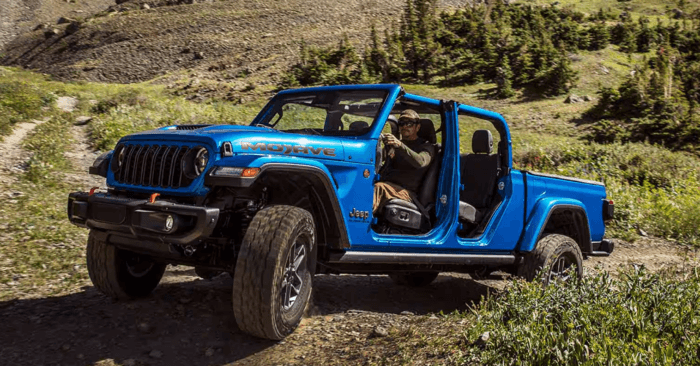
Blue 2025 Jeep Gladiator driving off road

Interior Space and Comfort Analysis

Climb inside and you'll spot some telling differences in priorities between the two trucks. The Jeep gives rear passengers a generous 38.3 inches of legroom, which is almost 4 inches more than typical compact trucks. Up front, you'll enjoy 42.8 inches of headroom and 41.2 inches to stretch your legs, so long trips with the family become way more comfortable. The Ranger has slightly roomier front legroom at 43.2 inches but skimps on the back seat with just 34.6 inches of legroom.

Let's talk about the Gladiator's removable doors and roof panels: nothing else in the truck world lets you feel the sun on your face while cruising through Bear Mountain or hitting the shores of the Long Island Sound on summer weekends. Both trucks seat five, though the Ranger offers 43.5 cubic feet of cargo space, giving it a slight edge for work duties. Materials and build quality vary depending on which trim you pick for either truck, so you get to select the ideal configuration for your needs and budget.
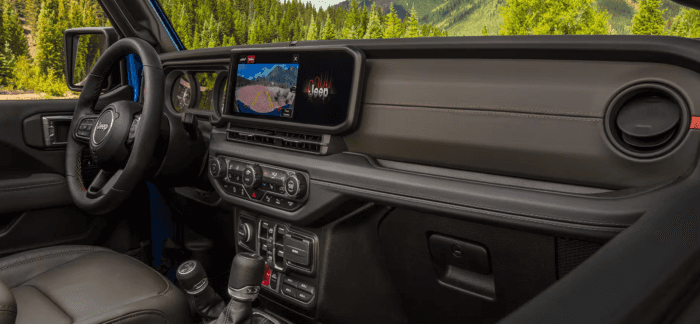
2025 Jeep Gladiator interior dashboard

Technology and Infotainment Systems

Exploring the tech features shows how these brands take distinct approaches to the cabin experience. Every Gladiator comes with a 12.3-inch Uconnect 5 touch screen — the largest standard screen in this segment. It pairs wirelessly through Apple CarPlay and Android Auto, and you get Jeep Connect remote services plus built-in off-road trail guides. The Gladiator also comes with the most USB ports in its class, with seven throughout the interior.

The Ranger offers a 12-inch touch screen with Ford's SYNC 4A system. FordPass Connect provides 4G Wi-Fi for up to 10 devices within 50 feet. Navigation includes live traffic and weather updates, as well as wireless map downloads. Like the Jeep, you also get wireless Apple CarPlay and Android Auto.

Lifestyle Fit Assessment

For deciding which pickup suits your life in Westchester County, consider what you plan to do with your truck. If fun and adventure are your goals, the Gladiator's tough to beat; it's essentially a convertible pickup with masterful off-road skills. If your family loves boating on the Hudson or needs to haul mountain bikes to Sprain Ridge Park, its rear seat space and towing muscle combination make a lot of sense. For weekend escapes and dirty adventures, this truck's your match.

The Ranger has a higher payload capacity and a slightly lower starting price than the Jeep. It boasts smoother performance on paved roads and gets better fuel economy, which can add up when commuting from Yorktown to Manhattan or regularly running the I-95. This makes it a better choice if you're a contractor, a commuter, or frequently take long road trips.

Finding Your Perfect Midsize Truck Match

The Gladiator has unique styling, tons of adventure-ready features, best-in-class rear legroom, solid towing, and unbeatable off-road handling. Plus, it's the only pickup that goes topless and doorless. It's made for anyone who sees their truck as more than A-to-B transportation.

But specs only tell some of the story — it's important to get behind the wheel to experience this midsize pickup for yourself. Contact us at Bill Volz Westchester CDJR to test-drive the Gladiator today. Our team knows local roads and lifestyles better than anyone in the Hudson Valley.

Images from jeep.com
Posted in:

Related Posts

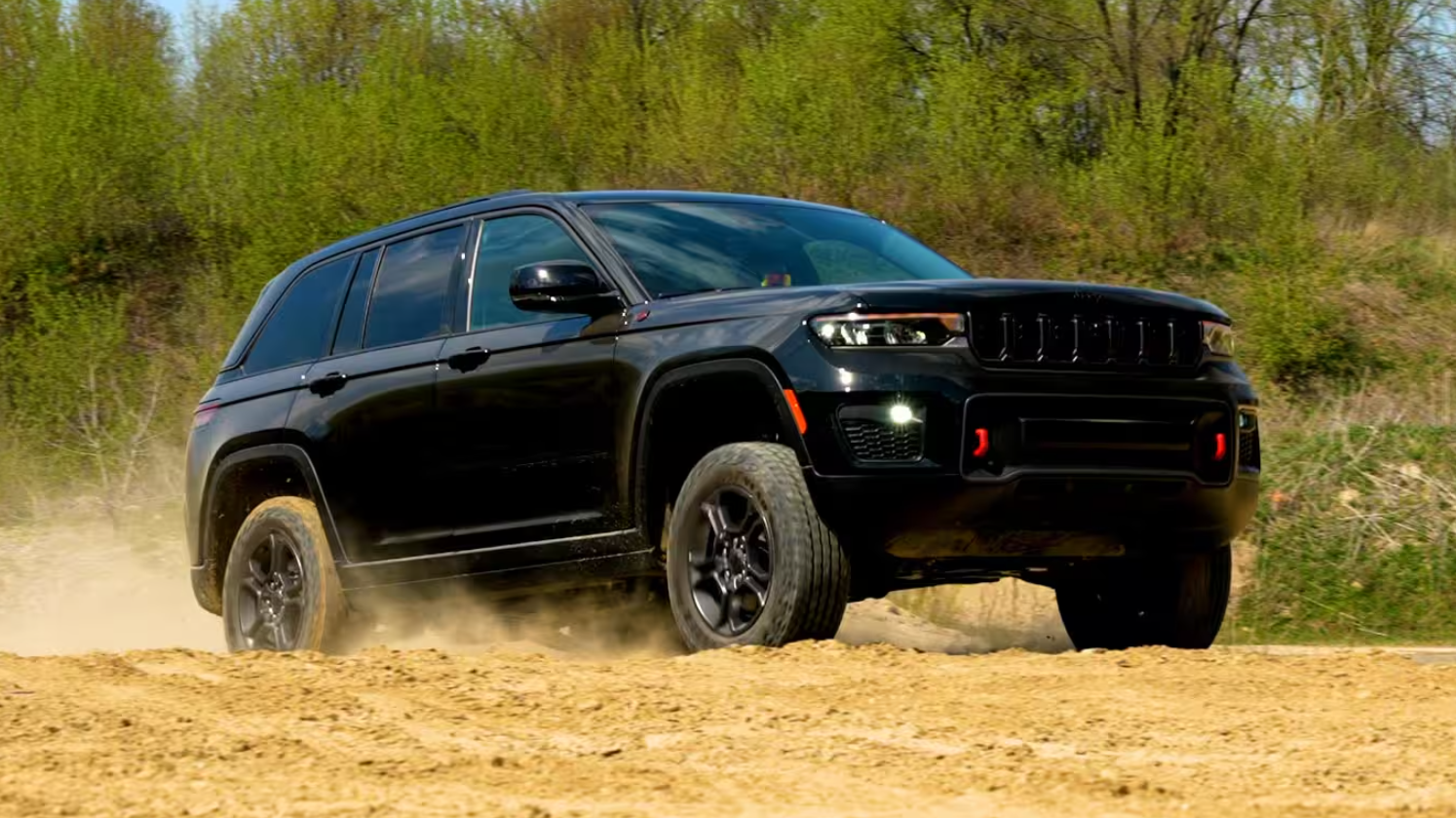
Black 2027 Jeep Grand Cherokee

Comparing the 2026 and 2027 Jeep Grand Cherokee Refresh Features and Hurricane Engine Options

Shoppers in Cortlandt keep asking us the same thing: should I buy a 2026 now or wait for the 2027? The 2026 vs 2027 Jeep Grand Cherokee refresh is mostly an evolution, and much of what sounds new for 2027 was already on the 2026. This guide covers what changed, what carried over, and which year suits the way you drive. You can also browse our new Jeep vehicles any time. 2026 vs 2027 Jeep Grand Cherokee Refresh: Key Differences at a Glance Our verdict: choose the 2026 if you want to test-drive the exact vehicle you’ll own, like the engine and screen setup available today, or don’t want to wait. The 2027 makes sense if the new Laredo Upland, the returning Trailhawk or Overland, or a standard 10.1-inch screen on the Laredo matters to you. What Changes and What Stays the Same The 2.0L Hurricane 4 Turbo, its ratings, the 12.3-inch screen, 19-speaker premium audio, Quadra-Trac II, seating and cargo space were all part of the 2026 Jeep Grand Cherokee. The 2027 changes are the larger standard screen on Laredo and Laredo X, the new Laredo Upland, the returning Trailhawk and Overland, and Silver Silk and gloss-black mirror accents. Seating for up to five, 37.7 cu ft of cargo behind the second row, and up to 70.8 cu ft with the seats folded are unchanged. Side-by-Side Comparison Table: Engine, Screen, Trims, and Drivetrain Feature 2026 2027 Engines 3.6L Pentastar V6 on Laredo and Laredo X; 2.0L Hurricane 4 Turbo on all other trims Same split: V6 on Laredo and Laredo X, Hurricane 4 Turbo on all other trims Horsepower and torque V6: 293 hp, 257 lb-ft. Turbo: 324 hp, 332 lb-ft Same ratings Fuel economy (city/highway) V6 4WD: 19/26/22. Turbo 2WD: 21/27/23. Turbo 4WD: 20/25/22 Same city and combined ratings Touchscreen 8.4-inch Uconnect 5 on Laredo and Laredo X; 12.3-inch Uconnect 5 NAV standard on Laredo Altitude and up 10.1-inch Uconnect 5 NAV standard on Laredo and Laredo X; 12.3-inch Uconnect 5 NAV standard on Laredo Altitude and up Drivetrain 2WD or 4WD: Quadra-Trac I, Quadra-Trac II (standard on Summit), Quadra-Drive II 2WD or 4WD: Quadra-Trac I, Quadra-Trac II, Quadra-Drive II Trims Laredo, Laredo X, Laredo Altitude, Limited, 85th Anniversary Edition, Limited Reserve, Summit Laredo, Laredo X, Laredo Altitude, Laredo Upland (new), Limited, Limited Reserve, Trailhawk, Overland, Summit (Limited Altitude is an option package) Maximum towing is 6,200 lbs for both years and both engines when properly equipped. Hurricane 4 Turbo Engine: The 324-hp 2.0L Explained The 2.0L Hurricane 4 Turbo is a turbocharged four-cylinder. If you searched for a Jeep Grand Cherokee Hurricane 6, this engine is a four, not an inline-six. It didn't debut in 2027. A Grand Cherokee with the Hurricane engine was already available in 2026, and the 2027 simply continues it. Power, Torque, and Efficiency Compared with the 2026 Lineup Horsepower tells you how much work the engine can do at higher speeds, like merging onto Route 9A or Route 6, while torque is the pull you feel from a stop or on a grade. The Hurricane 4 Turbo’s 324 hp and 332 lb-ft at just 3,000 rpm sit well above the V6’s 293 hp and 257 lb-ft at 4,000 rpm, and its estimated 21/27 mpg edges the V6’s up to 19/26. The 2027 change comes down to assignment. The V6 stays standard on Laredo and Laredo X, and every other 2027 trim gets the turbo. A Laredo buyer wanting the turbo wouldn't have found it on the 2026 either. What the New Engine Means for Towing and Daily Driving The turbo doesn't add towing capacity. The 6,200-lb maximum is the same for both engines and both years, and it applies when properly equipped. Your limit has to cover the trailer equipment, payload, tongue weight, and every passenger and bag of cargo. For daily driving, that extra torque means stronger acceleration under load and easier passing, so feel the difference on a test drive. Technology Updates: Available 12.3-Inch Touchscreen and Interior Changes The 12.3-inch Uconnect 5 NAV is standard on the Laredo Altitude and above in both years. The real 2027 change is lower in the lineup, where Laredo and Laredo X trade the 2026’s 8.4-inch screen, which had no built-in navigation, for a standard 10.1-inch Uconnect 5 NAV display. A bigger display means easier map reading and less squinting at menus. Apple CarPlay and Android Auto are what most shoppers use daily, so we'd suggest connecting your phone during a visit. The 2027 standard safety list includes adaptive cruise control with Stop and Go, Active Lane Management, full-speed forward collision warning with pedestrian and cyclist detection, a rear backup camera with rear park assist, and blind-spot monitoring. These systems assist, and they can't replace attentive driving. The Summit's McIntosh audio is unchanged, with 19 speakers and up to 950 watts. Trim Lineup: Returning Trailhawk and Overland Compared Trailhawk is built around off-road capability. Overland leans toward premium comfort, though it carries capable 4x4 hardware too. Both return for 2027 with the Hurricane 4 Turbo. They share some systems but are very different vehicles, with tires, protection, and clearance setting them apart. Trailhawk vs. Overland Side-by-Side Table Feature Trailhawk Overland Powertrain Hurricane 4 Turbo, eight-speed automatic, 324 hp, 332 lb-ft Hurricane 4 Turbo standard Drivetrain Quadra-Trac II two-speed transfer case, rear electronic limited-slip differential Quadra-Trac II standard Off-road or luxury hardware Quadra-Lift air suspension, 30.5-inch Goodyear Territory All-Terrain tires, six steel skid plates, 11.4 in max ground clearance, red tow hooks Quadra-Lift air suspension, Hill-descent Control, 21-inch machine-faced wheels, Nappa leather, heated and ventilated front seats Key tech Selec-Terrain with Rock mode, TrailCam 360-degree surround-view camera with washer, Off-Road Pages Fuel economy Engine-level estimate: 21/27 mpg Engine-level estimate: 21/27 mpg. Overland-specific towing not yet announced The Trailhawk's approach angle is 36°, its breakover angle 24.4°, and its departure angle 30.3°. It also includes the Trailer Tow Package, with towing at 6,200 lbs when properly equipped. Which 2026 Trims Carry Over to 2027 The 2026 lineup runs Laredo, Laredo X, Laredo Altitude, Limited, 85th Anniversary Edition, Limited Reserve and Summit. For 2027, the Laredo-through-Summit core carries over, the Trailhawk and Overland return, and the new Laredo Upland adds Trailhawk front fascias, 18-inch wheels and vapor-gray tow hooks, borrowing the Trailhawk look without the full hardware. Want to compare trims in person? Schedule a test drive and we'll line them up. How the 2027 Jeep Grand Cherokee Handles Westchester County Driving Westchester County puts a Grand Cherokee through commutes and hills, plus the occasional weekend escape. The right trim depends on how you split your time. Commuters: Look for comfort and visibility, and check that your phone connects easily. Families: Seating for up to five and generous cargo space carry over from 2026. Towing: Both engines share the 6,200-lb maximum when properly equipped. Off-road fans: Trailhawk is the one built for it. Available 4x4 Systems on Icy Taconic State Parkway Commutes 4x4 is available rather than standard across the Grand Cherokee lineup in both years, with several systems offered. Quadra-Trac I stays engaged for all-weather traction, which suits winter Taconic State Parkway commutes. Quadra-Trac II, standard on the 2026 Summit and the 2027 Overland, adds a two-speed transfer case and tire-slip sensors. Quadra-Drive II has a 2.72:1 low range and a rear electronic limited-slip differential that can send up to 100% of available torque to the axle with the most traction. The Selec-Terrain modes (Auto, Sport, Rock, Snow, and Mud/Sand) carry over from 2026. Still, 4x4 helps you get moving on slick surfaces, but it does nothing to shorten braking distances on ice. Good tires and reduced speed matter just as much on those hills, and so does leaving extra room behind the car ahead. Weekend Trips to Fahnestock State Park and Hudson Valley Trails Fahnestock State Park is a 15,000-acre park in Putnam and Dutchess counties with hiking trails, picnic areas, boating, fishing, and birding. Fahnestock Winter Park has 20 km of groomed trails for cross-country skiing and snowshoeing. It is within an hour's drive of Cortlandt, as are many Hudson Valley destinations. Your Grand Cherokee gets you to the trailhead, since hiking and ski trails are closed to vehicles. For paved weekend outings, any trim works. If you regularly use legal unpaved access roads, tires and clearance start to matter, along with underbody protection, and that is where Trailhawk stands out. Pricing and Value: 2026 Savings vs. 2027 Updates The 2026 Grand Cherokee starts at $38,920 for the Laredo 4x2 and runs to $60,600 for the Summit 4x4, while the 2027 starts at $39,730, all before the $1,995 destination charge. Savings on a remaining 2026 depend on inventory and active offers, so compare similarly equipped vehicles. Because so much hardware carries over, a well-matched 2026 delivers many of the same core benefits as a 2027. Ask for written quotes and review financing alongside price, since rate, term and down payment all change your total cost. Should You Buy a 2026 Now or Reserve a 2027 in Cortlandt Manor? Jeep says 2027 orders are open and arrival at dealerships is expected in late 2026. That is general manufacturer information, so contact us about availability for specifics. Timing for individual trims, including Trailhawk and Overland, can vary. The 2026 is the better pick if you want to inspect the exact vehicle, need one soon or are happy with the screen and engine on offer. If the new Laredo Upland, the returning Trailhawk or Overland, or the 10.1-inch standard screen is on your must-have list, a 2027 Jeep Grand Cherokee in Cortlandt Manor is worth the wait. Not sure which camp you are in? Browse our new Jeep Grand Cherokee inventory in Cortlandt, or see all new Jeep vehicles for sale in Cortlandt. What to ask us: Is the 2027 Grand Cherokee trim I want available, and what does the timing look like? Which 2026 Grand Cherokee models do you have in stock right now? What is my trade-in worth? What financing options fit my budget? Browse 2026 Deals or Reserve a 2027 Grand Cherokee at Bill Volz's Westchester CDJR Whether you are leaning toward a 2026 now or a 2027 Jeep Grand Cherokee in Cortlandt Manor later, we'll help you match the trim to your commute and weekends. Browse our current 2026 inventory online, then contact us about 2027 availability. Sales hours are Monday through Thursday 9 AM to 7 PM, and Friday and Saturday 9 AM to 6 PM. Call us at 914-996-6133. Frequently Asked Questions Is the Hurricane 4 Turbo new for 2027? No. The 324-hp, 332 lb-ft engine was available in 2026 with the same ratings. In 2027, it is standard on every trim except Laredo and Laredo X. Does every 2027 Grand Cherokee have a 12.3-inch screen? No. It’s standard on the Laredo Altitude and above, while Laredo and Laredo X get a standard 10.1-inch screen. What is the maximum towing capacity? Up to 6,200 lbs for the 2026 and both 2027 engines. The 2027 Trailhawk reaches it when properly equipped, so confirm the equipment on any vehicle you are considering. Is the 2027 worth waiting for? It depends on your needs. If you want the Laredo Upland or other 2027 changes, it can be. If you are happy with what the 2026 offers, there is little reason to hold off. Should I buy or lease? Both can work, depending on how long you keep vehicles and how many miles you drive. Contact us and we'll walk through current offers, including whether any 2026 trims have them.

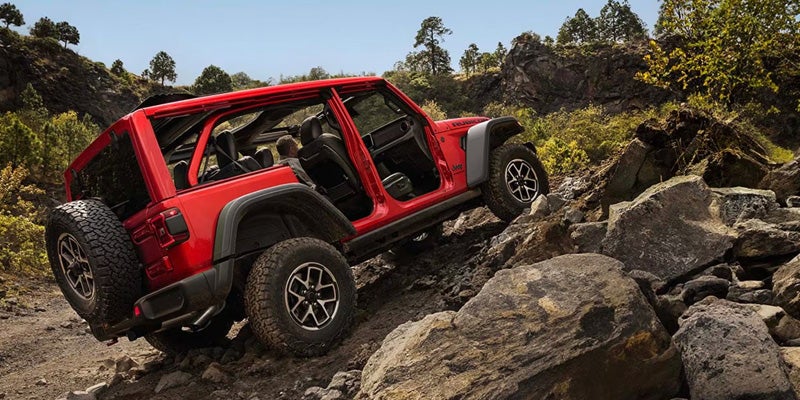
Red 2026 Jeep Wrangler driving off-road

What to Know About 2026 Jeep Reliability: Common Questions Answered

If you're weighing a Wrangler or Grand Cherokee purchase, you've probably typed "are Jeeps reliable" into a search bar more than once. Fair question. Jeep built its brand on rugged capability, but capability and long-term dependability don't always travel together. Below, we break down what actually drives 2026 Jeep reliability, where the lineup shines, and where owners should stay proactive with maintenance. Is the 2026 Jeep Lineup Reliable? The 2026 Jeep lineup holds up well when owners stick to scheduled maintenance. Jeep quality has steadily improved over the past several model years, with better electronics, tighter build tolerances, and more refined powertrains than older generations offered. Still, no vehicle is problem-free. Jeep reliability tends to hinge on engine choice, driving conditions, and how consistently a vehicle gets serviced. Westchester County drivers dealing with salt, potholes, and highway miles should pay particular attention to maintenance intervals, which we'll cover later in this guide. If you're ready to compare trims in person, you can browse new Jeep vehicles for sale in Cortlandt and see current inventory firsthand. Is the 2026 Jeep Wrangler Built to Last? Generally, yes. J.D. Power gives the 2026 Wrangler an 85 out of 100 for Quality & Reliability, which lands in the "Great" band on its 100-point scale. Two things work in its favor long term. The body-on-frame design keeps most repairs accessible, and parts are cheap and widely available because Jeep has built this platform in volume for years. Your technician has almost certainly seen your problem before. Engine choice matters more than trim level. The 3.6L Pentastar V6 is standard on Sport, Sport S, Willys, Rubicon, and Rubicon X and has the longest field record of the three. The 2.0L turbo four is standard on Sahara and available elsewhere. The 6.4L HEMI V8 returns exclusively in the new Moab 392, replacing the retired Rubicon 392. If dependability is your priority, we generally point people toward the V6. On towing, the Wrangler ranges from 2,000 lbs on 2-door models up to a best-in-class 5,000 lbs on properly equipped 4-door Rubicons. That top figure depends on a specific transmission, axle ratio, and rear axle combination, so confirm the configuration before you buy. Do the 2026 Wrangler Updates Affect Reliability? Not meaningfully, and that is a good thing. The Moab 392 is the headline change, but the platform, transmissions, and 4x4 hardware carry over largely unchanged from a generation Jeep has built since 2018. New model years introduce risk when they introduce new engineering. This one mostly does not. Every 2026 Wrangler remains Trail Rated, with the Command-Trac, Selec-Trac, or Rock-Trac 4x4 system depending on trim. Rubicon models add solid Dana 44 axles, sway-bar disconnects, and heavy-duty transfer cases. A Rubicon is built for tougher trails than a Sport S, but that does not automatically make it more dependable. The heavier-duty components give you more margin, and that margin only pays off if the fluids get changed. Transfer cases and lockers are durable until they run on contaminated fluid, which is exactly what a salted Westchester winter produces. Is the Pentastar V6 a Reliable Engine? Yes, and it is the engine we recommend most often to buyers who put dependability first. The 3.6L Pentastar has been in production since 2011, and examples surpassing 200,000 miles on basic maintenance are common rather than exceptional. The 8-speed automatic paired with it is equally well proven. The advantage is not just longevity. It is predictability. Failure patterns are known, parts are inexpensive, and diagnosis is fast. One item to watch: the Pentastar can develop oil filter housing and gasket leaks as it ages. It is a straightforward repair, and catching it early is the difference between a routine job and an engine problem. We check for it during regular service. Is the 2026 Jeep Grand Cherokee Dependable for Daily Driving? Yes. J.D. Power gives the 2026 Grand Cherokee a predicted reliability score of 81 out of 100, the same "Great" band as the Wrangler. It also earns five stars overall from NHTSA and a Good rating from the IIHS in small overlap front and updated side impact testing. Engine choice is the main reliability decision here, and 2026 changed it. The base Laredo and Laredo X keep the 3.6L Pentastar V6. Everything from the Laredo Altitude package upward moves to the all-new 2.0L Hurricane 4 Turbo. Being straight about the tradeoff: the Pentastar has powered Grand Cherokees since 2011 and has the field history behind it. The Hurricane makes more power and torque while keeping the same 6,200 lb tow rating, but no new engine has a long-term track record on day one. If a proven service history matters most to you, the Laredo and Laredo X are where you will find it. Jeep also discontinued the plug-in hybrid 4xe for 2026 as part of a Stellantis-wide phase-out. It had been subject to multiple recalls, including a high-voltage battery fire risk. Existing owners remain covered, and our technicians handle those campaigns. For 4x4, Quadra-Trac I is available on most trims and the Summit gets Quadra-Trac II, while Selec-Terrain offers five drive modes. If a Grand Cherokee fits your daily routine, take a look at our new SUVs for sale in Cortlandt to see current trim availability. What Are the Most Common Jeep Reliability Complaints? Any guide that tells you a vehicle has no known issues is not being useful. Here are the items that come up most often on the current Wrangler generation, and what we do about each one. Auxiliary battery and stop-start faults. The Wrangler uses a dual-battery setup, and when the auxiliary battery weakens it can produce symptoms that look unrelated to a battery: an "ESS Unavailable" message, audio dropouts, or odd electrical behavior. It is the single most common source of electrical complaints on this platform. We test both batteries during routine service, and replacement is inexpensive compared to chasing the symptoms individually. Windshield cracking. The Wrangler's windshield sits at a nearly vertical angle, which makes it more vulnerable to stone chips than a raked windshield. This is a design consequence, not a defect. Addressing chips early keeps them from spreading. 2.0L turbo coolant loss. Some turbo four owners report gradual coolant loss. Checking the coolant level between services catches it before it becomes an overheating problem. Paint bubbling. Reported across several model years and worth inspecting for, particularly given road salt exposure in this area. None of these are reasons to avoid a Jeep. They are reasons to buy from somewhere that will tell you about them upfront and stay ahead of them on a service schedule. What Factory Warranty Coverage Protects Your 2026 Jeep? Every 2026 Jeep comes with four layers of factory coverage. Basic coverage runs 3 years or 36,000 miles, the powertrain protection extends to 5 years or 60,000 miles, and rust-through perforation is covered for 5 years with unlimited miles, which matters a lot in a salt-belt climate like Westchester County. Roadside assistance rounds things out at 5 years or 60,000 miles. Jeep Wave is no longer available on MY2026 and newer vehicles, though it still applies to Jeep vehicles purchased between model years 2021 and 2025. Starting with MY2026, buyers can instead enroll in the FlexCare Vehicle Protection Program, the Stellantis-backed service contract offered in several coverage tiers. It's worth knowing the difference: Jeep Wave came with the vehicle and included scheduled maintenance, while FlexCare is a paid plan you opt into, so 2026 buyers should factor that into their ownership budget. How Does a Jeep Handle Westchester County Winters and Road Salt? Jeeps handle winter driving well thanks to their 4x4 systems, but road salt is the bigger long-term threat to reliability. Salt accelerates corrosion on the undercarriage, brake lines, and exhaust components if a vehicle isn't rinsed regularly. That's exactly why the unlimited-mileage corrosion coverage matters so much for owners in Cortlandt Manor, Peekskill, Yorktown Heights, and surrounding Westchester County towns. Washing the undercarriage after salted roads and staying ahead of suspension inspections goes a long way toward protecting your investment. Why the Taconic State Parkway Demands a Reliable 4x4 The Taconic State Parkway and Sprain Brook Parkway were built in a pre-modern-traffic era, with narrow lanes, limited shoulders, and sudden curves that punish drivers who aren't prepared. New York State police reported more than 10 crashes on one stretch of the Taconic during a single sleet event before 10:30 a.m., most attributed to drivers going too fast for slick conditions. A Grand Cherokee's Selec-Terrain system lets drivers select from five modes including snow, rock, and mud/sand, plus an auto setting that handles changing conditions without input, while a Wrangler's Command-Trac system delivers a 50/50 torque split front-to-rear once shifted into 4H part-time, when you need it most. Drivers who regularly tackle these parkways benefit from that kind of traction management. What Maintenance Keeps Your Jeep Reliable for the Long Haul? Oil changes, fluid checks, and timely inspections are the backbone of Jeep reliability. Skip them, and a durable engine can turn into an expensive repair bill fast. Recommended Service Schedule for 2026 Models Standard oil change intervals run every 7,500 to 10,000 miles, capped at 10,000 miles or 12 months, whichever comes first. If you're driving in severe-duty conditions, common during Westchester winters, that interval shortens to every 3,000 to 5,000 miles using specified full synthetic oil. On V6 models, spark plugs get their first change at 100,000 miles, then every 50,000 miles after that; 2.0L Turbo models require spark plug replacement every 60,000 miles. At 20,000 miles, plan for a cabin air filter replacement and brake inspection. Under severe-duty conditions common to salted winter roads, Jeep recommends a transfer case fluid service around every 30,000 miles, along with regular drivetrain inspections, to help offset the extra wear from salt and potholes. Wrangler owners who drive off-road regularly should also keep a close eye on suspension and steering parts. Finding a Trusted Jeep Service Center Near Peekskill If you're searching for a Jeep service center near Peekskill, working with factory-trained technicians who use genuine Mopar parts makes a real difference in long-term reliability. A shop that knows Jeep-specific service intervals, from transfer case fluid to PCM diagnostics, catches small issues before they become expensive ones. Building a relationship with a local service team also means faster turnaround and more personalized care over the life of your vehicle. Trust Our Certified Technicians at Bill Volz's Westchester CDJR At Bill Volz's Westchester CDJR, our factory-trained technicians use genuine Mopar parts on every job, so your Jeep gets the same quality components it left the factory with. We're proud of our roots in this community, supporting local causes like the BluePath Service Dogs walkathon and the Alliance for Safe Kids program. Ready to Take the Next Step? Whether you need routine maintenance, want to explore CPO inventory, or you're ready to find your next Wrangler or Grand Cherokee, stop by 2293 Crompond Road in Cortlandt Manor or reach out to our team today. We're glad to answer your questions and help you drive with confidence.

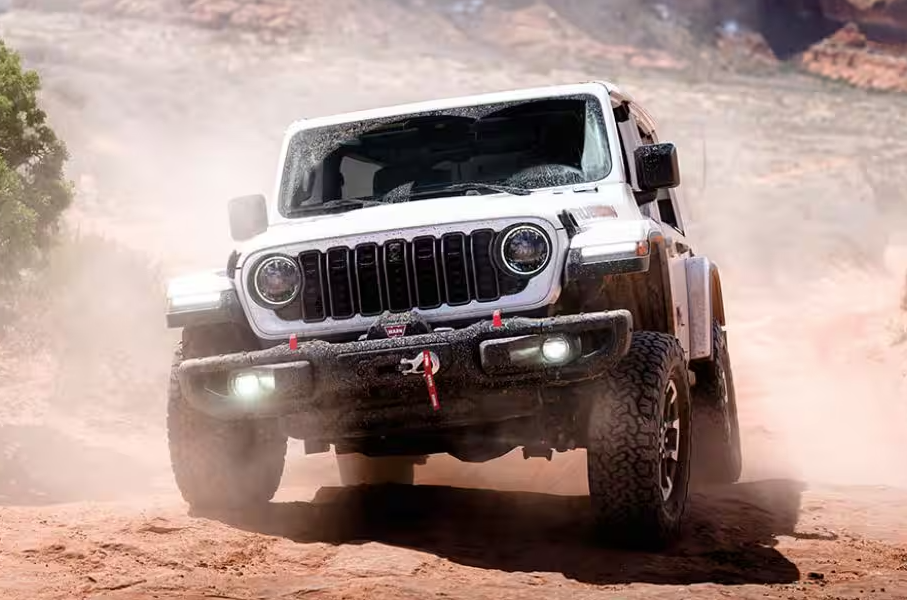
White 2026 Jeep Wrangler Rubicon

Comparing 2026 Jeep Wrangler Trims (Sport, Sahara, Rubicon)

The Jeep Wrangler has been around long enough to become a genuine cultural fixture. It draws a crowd wherever it parks, and the 2026 Wrangler is no exception. If you're seriously considering one, figuring out which trim actually fits how you live and drive matters more than anything else. The Sport, Sahara, and Rubicon each have a distinct personality, and knowing the difference before you sign anything can save you real money and real regret. Why the 2026 Jeep Wrangler Still Turns Heads in the Hudson Valley The Hudson Valley is genuinely good Wrangler country. Between the Catskill foothills, the rocky forest roads in Harriman State Park, and the winding back routes connecting small towns throughout Westchester County, this region rewards drivers who want capability without sacrificing personality. The Wrangler fits that environment naturally. What makes the 2026 model especially compelling right now is how well it balances modern features with its classic identity. The removable doors, fold-down windshield, and open-air freedom that defined early Wranglers are still there. Layered over that foundation are updated technology and refined powertrains that make the vehicle genuinely comfortable for the kind of mixed-use driving most Hudson Valley residents actually do, whether that's a morning highway commute or a Saturday on a forest trail. 2026 Jeep Wrangler Trims at a Glance: Sport, Sahara, and Rubicon The 2026 Wrangler lineup spans a wider range of trims, including options like the Willys and the high-performance Rubicon 392, but three trims anchor the lineup and account for most of what buyers actually shop. The Sport is the starting point, stripped of excess and priced to welcome first-time buyers. The Sahara sits in the middle, adding comfort and convenience features that make it well-suited for daily use. The Rubicon sits at the top of the off-road spectrum, loaded with hardware that most paved-road drivers will never fully use but trail enthusiasts deeply appreciate. Each trim has a distinct purpose, and the right choice depends heavily on how you actually plan to drive. Price is part of that difference, but so are priorities and how you'll spend most of your time behind the wheel. 2026 Jeep Wrangler Sport: Built for Those Who Want the Icon Without the Extras The Sport is what the Wrangler looks like when you remove the noise and focus on the essentials. It's the base trim, and it earns that label without apology. What Comes Standard and Who It Suits Best The Sport delivers the foundational Wrangler experience: body-on-frame construction, solid axles, and skid plates, along with the go-anywhere attitude that made this vehicle legendary. Powered by a 3.6L V6 producing 285 horsepower, it comes with a capable 4x4 system, manual or automatic transmission options, and enough standard tech to keep you connected without turning the cabin into a cockpit. For first-time Wrangler buyers, the Sport is an honest starting point. It doesn't try to oversell itself, and the price reflects that straightforwardness. Younger buyers, budget-conscious shoppers, and anyone who sees the Wrangler as a platform to build on over time rather than a finished product will find it fits well. Customization Potential for Hudson Valley Drivers One of the Sport's quiet strengths is how well it accepts modification. Because it arrives relatively light on factory add-ons, it gives owners a blank canvas. Hudson Valley drivers looking to add a lift kit, custom lighting, a roof rack for kayak season, or a winch for winter recovery all start from a cleaner baseline with the Sport than with higher trims that come pre-loaded. The Mopar parts and accessories catalog available through dealers like Bill Volz's Westchester CDJR makes this even more accessible. Genuine factory-compatible parts mean you can personalize without voiding warranties or compromising the Wrangler's engineering. If you're ready to explore what's available, you can browse our 2026 Jeep Wrangler inventory to see current Sport configurations in stock. 2026 Jeep Wrangler Sahara: Comfort and Character for Everyday Adventures The Sahara is where the Wrangler becomes a vehicle you'd genuinely want to drive every day. It adds comfort, style, and technology without abandoning the Wrangler's core character. Open-Air Features and On-Road Refinements The Sahara builds on the Sport's foundation with upgrades you feel immediately. The interior materials step up noticeably, with better upholstery and more refined trim details. You get improved audio, upgraded tech features including a more advanced digital display, and a more polished dashboard. On the road, the Sahara rides with more composure, which becomes relevant once you're spending real time on highway stretches rather than backroads. The open-air experience, one of the Wrangler's signature features, is also more refined here. The soft top and hardtop options integrate more smoothly, making the transition between enclosed and open-air driving feel less like a project. For drivers who want to drop the top on a fall afternoon through Harriman or pull the doors off for a summer weekend, the Sahara makes that feel effortless. Where the Sahara Finds Its Sweet Spot The Sahara captures a wide range of buyers because it doesn't demand a strong commitment to any single use case. Families appreciate the interior comfort on longer drives, commuters value the on-road refinements, and weekend adventurers get meaningful 4x4 capability when the paved road ends. In the Sport vs. Sahara debate, the choice often comes down to how much you value daily comfort versus how much you enjoy starting from scratch with customization. The Sahara gives you more right out of the box, and for many Hudson Valley buyers, that convenience is worth the additional investment. 2026 Jeep Wrangler Rubicon: Ready for Every Trail the Hudson Valley Can Throw at You The Rubicon is what happens when Jeep engineers are given permission to prioritize off-road performance above nearly everything else. It's impressive, and it's unapologetically focused. Off-Road Hardware That Sets It Apart The Rubicon's off-road capability comes from purpose-built hardware, not marketing. Electronic locking front and rear differentials provide traction on surfaces that would strand most vehicles. The Dana 44 axles are stronger and more durable than what you find on lower trims. Heavy-duty rock rails protect the body during technical trail driving, and the electronic sway bar disconnect dramatically increases axle articulation on uneven terrain. Add in the aggressive all-terrain tires, upgraded suspension tuning, and reinforced skid plates, and you have a vehicle that handles rocks, mud, and the kind of ruts that would leave a lesser truck sideways without much drama. This hardware package comes at a clear cost, and it shows up directly in the Rubicon's price. Is the Rubicon Overkill for Everyday Driving If your daily route consists of the Taconic State Parkway, Route 9, and the occasional grocery run, the Rubicon's trail-focused suspension and aggressive tires will feel like wearing hiking boots to a dinner party. That's worth acknowledging honestly. The Rubicon isn't uncomfortable on pavement, though. Its on-road manners have improved with each generation, and many owners drive them daily without major complaints. The more relevant consideration is whether you'll actually use what you're paying for. If you trail ride regularly, explore forest roads in the Catskills, or want maximum off-road confidence for a serious overland trip, every feature on the Rubicon earns its place. If your off-road moments are rare and casual, the Sahara likely serves you better. Choosing Your 2026 Wrangler Trim: A Practical Guide for Hudson Valley Lifestyles Understanding the trim levels in theory is one thing. Matching them to your actual daily reality is more useful. The Wrangler lineup is designed around distinct driver profiles, and knowing which one fits you makes the comparison much more actionable. On-Road Commuter or Weekend Cruiser If your primary use is getting to work, running errands, and occasionally taking weekend road trips, the Sport or Sahara deserves your closest attention. The Sport keeps costs manageable and still delivers the Wrangler personality. The Sahara adds enough daily comfort to make the vehicle feel like a genuine pleasure to drive. Both handle the mixed terrain of the Hudson Valley well, and neither demands that you justify your purchase with regular off-road adventure. The Off-Road Enthusiast and Trail-Seeker For drivers who know their way around a trail map and spend real time on unpaved surfaces, the Rubicon is the honest answer. The differences between it and the lower trims aren't cosmetic; they're structural. The locking differentials and sway bar disconnect, combined with reinforced axles, create a capability gap that aftermarket upgrades on the Sport or Sahara won't fully close. If trails are a regular part of your life, buying the Rubicon upfront makes more sense than building toward it later. The Buyer Who Wants a Little of Everything Many Hudson Valley buyers fall somewhere in between, wanting daily drivability but not wanting to feel limited when adventure calls. The Sahara is purpose-built for exactly this person. It offers a noticeably upgraded interior and solid technology features, all wrapped in the Wrangler's unmistakable design. You give up some of the Rubicon's extreme off-road hardware, but you gain genuine everyday comfort without losing the open-air freedom and rugged personality that drew you to the 2026 Wrangler in the first place. Find Your 2026 Jeep Wrangler at Bill Volz's Westchester CDJR Reading about the trim levels is a good foundation, but sitting inside each one and talking through your specific needs with someone who actually knows the lineup is a different experience. Bill Volz's Westchester CDJR, located at 2293 Crompond Rd in Cortlandt, NY, carries the full 2026 Wrangler lineup and gives you the chance to see the Sport, Sahara, and Rubicon in person. The team here brings genuine knowledge of these vehicles and a no-pressure approach to the buying process, which matters when you're making a decision this size. You can talk through trim comparison details, work through financing options, or schedule a test drive on local roads that actually reflect how you'll use the vehicle. Ready to get started? You can browse our 2026 Jeep Wrangler inventory online before you visit, or explore our new Jeep vehicles if you want to see everything we currently have available. Factory-trained technicians on site mean your Wrangler gets proper care long after the purchase, which is exactly what you want from a vehicle built to last.