




Bill Volz's Westchester

Blog / Driving Tips

Off-Roading Clubs for Jeep Lovers near Cortlandt, NY

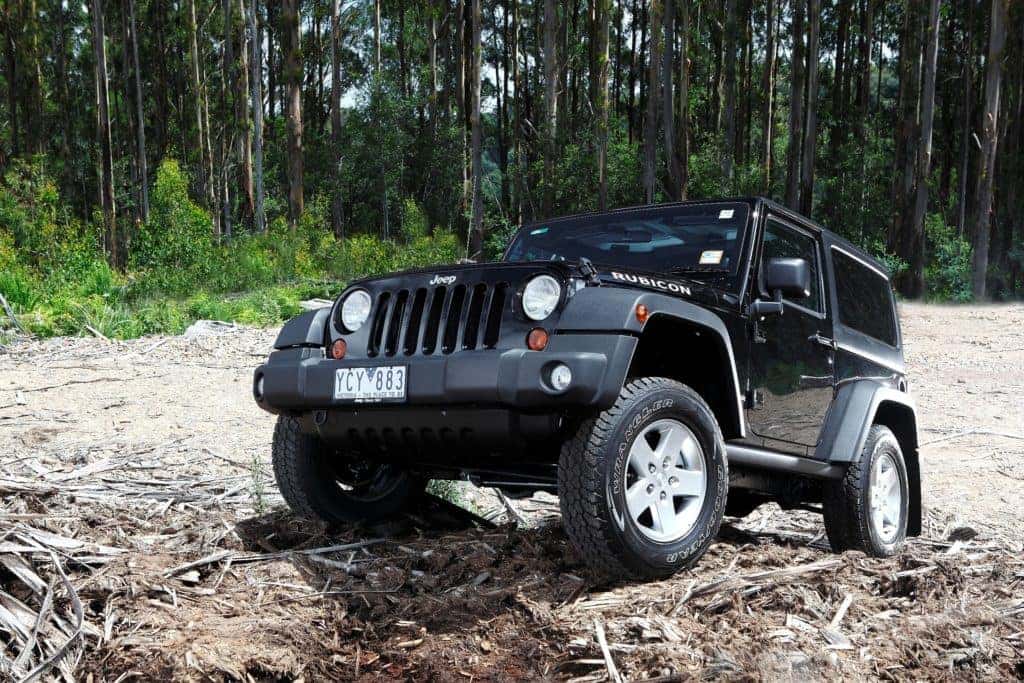
Jeep Wrangler Off-roading

Jeeps are fun to drive on any terrain, but it would be a shame to own one and not venture into off-road territory whenever you have the chance. Pushing your Jeep to the limit is indeed incredibly fun, but like most things, it's more fun to do it with friends and like-minded people. Luckily, if you're a Jeep owner who lives in the Cortlandt area or other nearby areas in upstate New York, there are plenty of Jeep clubs that can expose you to a world of fun and adventure.

Joining a Jeep off-road adventure club can help you get the most out of your Jeep, as you're likely to meet experienced members who will share the basics of safe off-roading. Not only will you find companions you can learn from, but you can also forge long-lasting friendships with fellow Jeep enthusiasts. Besides making new friends, joining a Jeep club will also give you the opportunity to discover amazing trails relatively close to where you live. These are some of the most well-known Jeep clubs in your area.

Adirondack Jeeps

This family-friendly off-roading club is mostly for Jeep owners, but all off-roading enthusiasts with full-size off-road vehicles are more than welcome to join the fun. They meet once a

month in different locations in upstate New York, and as members of the Northeast Association of 4WD Clubs and Northeast Offroad Vehicle Alliance, they also organize off-roading adventures on private property in nearby states like Vermont, Massachusetts, and New Hampshire.

This family-friendly club is dedicated to the “Tread Lightly” belief, and its members work hard to help others understand the basic rules of off-roading,  to keep it safe for themselves, their passengers, and the environment. Besides helping off-roading enthusiasts practice their hobby safely, promoting this sport's safety guidelines and laws also keeps it legal. Members of Adirondack Jeeps also get involved in helping their local communities through volunteering and fundraising.

Capital District Jeep Wrangler

This club was started in 2012 by two off-roading enthusiasts, Jason Anderson and Keith Webber. Their goals were to have a good time driving their Jeeps on rough terrains, find fellow off-roading enthusiasts in the area to join them, and find ways to give back to their community. Nine years later, it's safe to say they met all their initial goals, as Capital District Jeep Wrangler has built a strong community of off-roaders that has fun together and helps local organizations.

From a management perspective, CDJW's main goal is to inspire a culture of quality, and they do their best to epitomize that in everything they do. This starts with transparency, with all members being welcome to attend the club's monthly board meetings and have their say regarding its future. There's also third-party oversight to make sure that all club and member resources are used efficiently and effectively for the good of the club and the local community.

Some of the most important benefits of becoming a member of Capital District Jeep Wrangler include the large number of available trails in its portfolio, the knowledge that beginning and intermediate off-roaders can soak up from more experienced members, and the many exclusive discounts at local and national retailers. The local community also wins, as CDJW works with local organizations, such as the Civil Air patrol, to raise money for special causes.

Long Island Off Road Inc 

This trail riding club is based in Long Island, New York, and meets on the first Tuesday of each month. As with most similar clubs, members do their best to find the balance between fun and safety and are totally family-oriented. This means that, as a member, you can take your family out off-roading and make a day of it. It's one of the longest-running off-roading clubs in the area, having been around since 1993, and it's gathered an impressive trail portfolio over almost three decades.

Members don't have to own a Jeep, but they do require that all vehicles be properly equipped with off-roading gear and be in good condition, as most trails don't have any repair shops and parts stores nearby. Off-roading enthusiasts who are thinking of joining this club should know that doing so will not only lead to great times with family, friends, and fellow club members, but also give them the opportunity to observe some impressively modified off-road vehicles.

New York City Jeep Club

This Jeep-exclusive off-roading club is dedicated to Jeep owners and adventure enthusiasts from New York City's five boroughs and Long Island, but it's open to new members from all over the upstate New York area. Members officially meet on the last Friday of each month, but usually have more frequent off-roading trips. Their events gather club members together to discuss Jeeps and more but are also good opportunities to find new ways of helping community members in need of food and other necessities.

The club was started in 2009 by two friends from Queens, a couple of dirt-bike enthusiasts who had just gotten some worn-out Jeeps. Repairing the Jeeps exposed them to the exciting world of off-road vehicle repairs and enhancements. They quickly discovered how many people are passionate about Jeeps and the huge number of available aftermarket components they can fit on their vehicles. Although initially, they couldn't find fellow Jeep enthusiasts in their area, their club steadily grew over time and evolved into one of the most well-known in New York State.

Joining an off-roading club is a great way to make the most out of your Jeep, learn more about off-road terrains and vehicles, hang out with people who share your passions, and spend wonderful moments in nature with friends and family. Joining any of the clubs on this list will offer you all of that and more, and likely become a part of your monthly routine. If you're looking to buy a new or pre-owned Jeep, contact Bill Volz's Westchester and you'll definitely find what you need!
Posted in:

Related Posts

History of the Dodge Durango

History of the Dodge Durango

The Durango has been a favorite car among Dodge fans for over three decades, but have you ever wondered about the history of this vehicle? The story behind the Dodge Durango's evolution is a rather complicated one. As we draw closer to this vehicle's anticipated discontinuation in 2024, let's take a closer look at the behind-the-scenes history of the Dodge Durango. New Vehicle Offers Used Inventory Service Center History of the Dodge Durango The mid-sized SUV, the Dodge Durango, first emerged on the automobile scene in 1997. With its design modeled after a pickup truck with a covered trunk, Dodge hoped to appeal to prospective customers looking for an SUV midway between smaller models like the Ford Explorer and larger cars like the Chevrolet Tahoe. Since then, this beloved vehicle has gone through four generations. The Durango also briefly disappeared from the car scene between 2009 and 2011 before returning to the market. The Story of the Durango Name Did you know that the Dodge Durango received its name from a city in Colorado? Durango is a small town in this state known for its historical connections to America's vast railroad system. This city in Colorado was named after a Mexican state called Durango. By naming this SUV Durango, Dodge hoped to emphasize its revolutionary appearance on the automobile scene. The Evolution of the Durango Dodge first introduced the 1998 model of the Durango toward the end of 1997 as a replacement for its Ramcharger line of vehicles, which Dodge had produced for 28 years. Originally, the Dodge Durango had much of its platform in common with the Dakota pickup truck, meaning that it shared many of the Dakota truck's exterior and interior styling features. The primary change to the Durango's second generation was the introduction of the new and highly powerful 5.7-liter Hemi engine in the lineup. With the reappearance of the Durango on the market in 2011 for its third generation, Dodge made extensive changes inside and out, including giving consumers a choice between a V6 and a V8 engine and a much more spacious interior for its three rows. For its fourth and final iteration in 2020, Dodge decked out the Durango with top-of-the-line exterior features and a choice between a 3.5-liter V6 or a 5.7-liter V8 Hemi engine. Dodge has already announced that the forthcoming 2024 model of the Durango will be the vehicle's last appearance on the market before discontinuation. This is for a few reasons, including that Dodge wants to spend more time adding or updating hybrid and electric cars to its product lines and that the company noticed a decrease in Durango sales over the years. That said, Dodge has yet to comment on what the final 2024 model could look like or if an electrified replacement model exists. Changes to the Durango Exterior When Dodge first released the Durango, this SUV had numerous exterior elements in a retro style, such as its front fenders flared out and positioned lower than the hood, a crosshair grille design, and narrow horizontal headlights. The curved windshield, however, gave the Durango body a modern touch. With the release of the second generation of the Durango, its chassis continued to resemble the Dakota pickup truck, but that all changed in 2007 thanks to the redesigned hood of the vehicle. By the time the third generation of the Durango rolled around, Dodge made an apparent effort to distinguish this SUV from both the Dakota pickup truck and Dodge's other models. The redesigned exterior gave the Durango a more muscular appearance thanks to its sculpted hood, raised front bumper, and slimmed-down split crosshair grille. The rear also now featured glamorous LED racetrack tail lamps and a newly designed trailer hitch. Although the fourth generation received fewer updates to its exterior, the brand-new bumper, grille, and LED headlights gave the Durango a much more modern appearance. How the Durango's Features Changed In its first iteration, much of the Durango's interior resembled the Dakota pickup truck, including a similar dashboard design. A key difference was that the Durango offered a third row of rear-facing seats, allowing the vehicle to fit up to eight people. Dodge later removed this feature because of low market demand and replaced it with the now customary third row facing toward the front of the car, allowing seven people to fit comfortably within the Durango. While the second generation of the Durango more or less possesses the same interior features, the reappearance of the Durango on the car scene in 2011 offered many more stylish and technologically advanced updates. This included many outstanding safety features, such as tire pressure monitoring, all-speed traction control, rear parking assistance, and electronic stability control. The third generation also added touch screens in either a 5-inch or 8.4-inch size. Come 2020, the interior of the Durango received further updates. This included new materials and a standard UConnect infotainment system. Durango Through the Years: Engines and Fuel Efficiency With the V8 engine in its first generation, the Durango achieved 14 mpg in city conditions and 19 mpg while traveling along the highway. This engine also had an impressive 238 horsepower and 295 lb-ft of torque. Thanks to the engine upgrades of the second edition, the Durango boosted its city mpg to 16 and its highway to 21. The V8 engine in this second generation also raised its horsepower to 349. As the Durango evolved, it became even more powerful. With the advent of the third generation, the Durango could reach 294 horsepower and 260 lb-ft of torque thanks to its V6 engine, compared to 360 horsepower and 390 lb-ft of torque with the V8 engine. By 2020, the Durango will also become much more fuel-efficient despite its large and heavy frame, scoring 18 mpg in city conditions and 26 mpg along the highway. Did you get a chance to drive multiple iterations of the Durango? What's been your favorite part about how the Dodge Durango's evolved over the years? Let us know by leaving a comment on this blog. And if you're interested in getting a Durango of your own, feel free to browse our inventory of new Durango vehicles or used Durango models. You can also book a service appointment online if you have a Chrysler, Dodge, Jeep, or Ram vehicle you'd like our experts to take a closer look at. Photo Credit: Image via dodge.com

Worst Traffic Areas Around Westchester, NY

Bad traffic is enough to ruin anyone's day. If you're looking to drive around in your new Chrysler or Dodge vehicle with limited impediments, you may want to avoid the worst traffic areas around Westchester, New York. Here's a list of places and times to avoid if you want a smooth, quick trip. Taconic State Parkway Taconic State Parkway, which some locals simply refer to as the TSP, stretches for 104 miles. To understand why it's a road with such heavy traffic, you can first learn about its history. The concept for Taconic State Parkway was first introduced in 1895, and it opened in 1924. Its construction continued over the next several years as builders expanded it into Putnam County and Southern Dutchess County. Former President Franklin D. Roosevelt was responsible for the parkway's expansion, as he wanted a scenic road that stretched through the Hudson Valley area. While this road was a good idea when Westchester wasn't as populous, it has since developed into a dangerous situation. Most of Taconic State Parkway is only two lanes across, which means that it has trouble accommodating lots of cars during busy times. One report found that from early 2011 until mid-2014, more than 2,000 car accidents had occurred on the parkway. Most of these accidents occurred in Putnam County and Westchester County. Taconic State Parkway is particularly crowded on the southern stretches. In the morning, many drivers head to their jobs in New York City. This flow of vehicles creates heavy congestion. Conditions like snow, rain, and fog create even more severe traffic, as drivers have difficulty navigating the narrow, winding road. Reckless driving on this road is common, and frustrated drivers may be to blame. In 2015, police officers handed out more than 54,000 tickets, and most of them were to drivers traveling along the stretches of Putnam County and Westchester County. Speeding tends to be the primary offense. One of the most dangerous spots on the Taconic State Parkway used to be the Pudding Street intersection. Drivers traveling along Pudding Street had to cross the northbound and southbound lanes of Taconic State Highway to continue on their route. In 2020, a construction team added an overpass to make this area safer. Despite this slight improvement, it's best to avoid Taconic State Highway whenever possible. Amsterdam Avenue Tenth Avenue, which locals refer to as Amsterdam Avenue, is a road with heavy traffic, especially as locals head into Manhattan in the morning. It's a one-way road for a bit, as it carries cars heading north as far as West 110th Street. After that, it picks up as a two-way street. Amsterdam Avenue shares the nickname "Death Avenue" with its Eleventh Avenue counterpart, as it's quite narrow and can't adequately support the thousands of cars that pass through every morning and night. In 2016, a construction team installed a protected bike lane to help cyclists travel safely. This lane stretches from 72nd Street to 110th Street and has made the stretch a little safer for cyclists. However, the lane was repurposed from a lane that once contained car traffic, and drivers have noticed a difference. Car traffic seems to inch even slower, so you'll have to leave much earlier if you want to make it where you need to be on time. Cars seem to constantly stop and go, as the red lights cause severe backups in the morning. Drivers have to be attentive or risk getting into rear-end collisions. They also have to be aware of other drivers unsafely turning in from adjacent roads out of frustration. Avoiding Amsterdam Avenue is a great way to have some peace of mind during your morning commute or ride home from work. If you want further reassurance that you're safe on the road, bring your vehicle to our dealership's service center. We'll complete a full inspection of your vehicle's exterior and interior to ensure it's working as it should be. If it needs any services or repairs, we'll get to work so that you can get back on the road. New York State Route 59 New York State Route 59 is a state highway that runs east and west. It only runs for a little over 14 miles, but New Yorkers recognize that it's a slow-going road. One of the main reasons it gets so much traffic is because drivers use it to get to Palisades Center. Palisades Center is one of the largest shopping malls in both New York and the United States, so it draws a crowd. New York State Route 59 is a common way to get here, so you'll likely hit a lot of traffic even if this isn't your destination. As far as accidents go, collisions are common at the exits and entrances of the NYS Thruway. These entry and exit points are poorly designed and have confusing signage, so these challenges further impede traffic. U.S. Route 6 in New York U.S. Route 6 spans over 400 miles from Pennsylvania to Ohio, and nearly 78 miles of it occurs in New York. There's a mere mile stretch of this road along the Yorktown and Cortlandt border that gets particularly backed up between 7 and 9 a.m. Even though builders eventually expanded this road to include four lanes, it remains the source of heavy traffic. This road is common for people traveling to different states, so you may be able to avoid it if you're staying in New York. You might be able to hop onto NY 6N, which is an alternative route to U.S. Route 6 in New York. It travels through Westchester County and other areas and is often less congested. The team at Bill Volz Westchester commits to helping our customers get around as safely as possible. If you're looking for a new reliable vehicle, browse our inventory of new or certified pre-owned vehicles. You can also contact us to get in touch with someone on our team. All our staff members are knowledgeable, friendly, and willing to help you find the perfect vehicle you can use to get around Westchester.

Cortlandt, NY Flat tires

How to know if your Chrysler has a slow tire leak

Low tire pressure can be a nuisance, especially if it becomes a regular occurrence. Heading to the gas station or auto shop every month just to put some air into your tires can be very time-consuming and may lead to further complications in the future. It's essential to make sure your tires have the right amount of air to function properly and keep you safe on the road. When you suspect your tires have a slow leak, it's crucial to diagnose the issue and get it fixed by a professional as soon as possible. Not sure how to tell if your Chrysler has a slow tire leak? Our team at Bill Volz's Westchester has compiled a list of frequently asked questions about slow tire leaks and some helpful answers. With this guide, you'll have the knowledge and confidence to identify tire leaks on any Chrysler vehicle. What Is a Slow Tire Leak? A slow tire leak occurs when a car's tire loses small amounts of air pressure consistently, which can lead to other complications such as flat tires, blowouts, or inefficient steering of the vehicle over time. Slow tire leaks are relatively common, especially for those driving in industrial areas where driving over metal debris is more likely. Most newly manufactured cars have tire pressure monitoring systems that alert the driver when a tire loses at least 25% air pressure, making it easier to avoid more complex issues in the future. Even if you have this new technology, identifying a slow leak can still be a challenge. When a driver sees their tire pressure light come on, their first instinct might be to take the vehicle to a gas station to pump in new air manually. If your vehicle rarely has air pressure problems, this situation can be completely normal and not indicative of any more complex issues with the car's systems. When drivers have to pump new air frequently, they might have a slow leak instead. This situation often requires additional maintenance performed by a professional. What Causes Tire Leaks? There are three main causes of slow tire leaks, all of which can go unnoticed for some time before you notice the physical signs: Punctured tire: A punctured tire can result from a variety of factors, but usually happens after driving over pieces of metal debris, like nails. This debris wedges itself into your tire, slowly letting out air each time the car's weight pushes onto the tire itself. Damaged valve stem: The valve stem is the small attachment on your wheel where you can add, remove, or check your car's tire pressure. The valve stem can corrode over time, removing the seal that keeps the air inside the tires and leading to a slow leak. Damaged wheel: Another common cause of slow tire leaks is damage to the wheel itself.  Impacts from riding over curbs, speed bumps, or potholes can all deform the metal of the wheel, causing tires to fit less snugly in the wheel and a slow leak to form in the space between them. What Are The Signs of a Slow Tire Leak In Your Chrysler? When you suspect your Chrysler has a slow tire leak, here are some of the primary signs to look out for: Tire pressure light: If your tire pressure monitoring system light comes on frequently, it may be a sign of a slow tire leak. This is especially true if you regularly add air to all your tires and still notice the tire pressure light on a regular basis. Poor steering: If your car has low tire pressure because of a slow leak, this can lead to poor maneuvering of the vehicle to no fault of the driver. The lack of air in the tires can make the car sway, making it harder to turn effectively. Flat tires: Another sign of a slow tire leak is frequent flat tires, especially if they occur after you park the car for a long time. If you consistently have flat tires even after putting in new air — or replacing them altogether — this could be a sign of a wheel-related maintenance issue causing the slow tire leak. What Should You Do When You Find a Tire Leak? When you find a tire leak on your Chrysler, your first point of action should be to contact your dealership. Stop driving the vehicle immediately and inspect your tires for any obvious punctures or damage. If you find the source of a puncture, you can replace it with a space or use a sealant product to buy your tire sometime before bringing the car in for a professional evaluation. Afterward, call or make an appointment online with our service department to schedule a time slot to bring the car in so our expert technicians can repair the leak. Why Should You Fix a Tire Leak at a Dealership? Whether your car has a tire leak, faulty light, or low oil, getting it serviced at your Chrysler dealership ensures it gets all the necessary repairs. The technicians at our dealerships are factory-trained and have access to the official parts created by the manufacturer. Therefore, they have access to resources and information that standard auto mechanics simply don't have. When you take your car to a Chrysler dealership, you can feel confident that you're receiving the best possible service and care for your vehicle. So, there you have it. We've answered the most frequently asked questions for identifying a slow tire leak on your Chrysler. We hope you found this article useful and can apply the information you learned the next time you suspect low tire pressure or a leak. Did we leave out one of your questions about diagnosing slow tire leaks? Want to learn more about proper Chrysler maintenance and care? Feel free to contact us today at Bill Volz's Westchester in Cortlandt, New York, and a member of our dedicated staff will be more than happy to answer your questions.  You can also call our service center at 888-711-9927.