




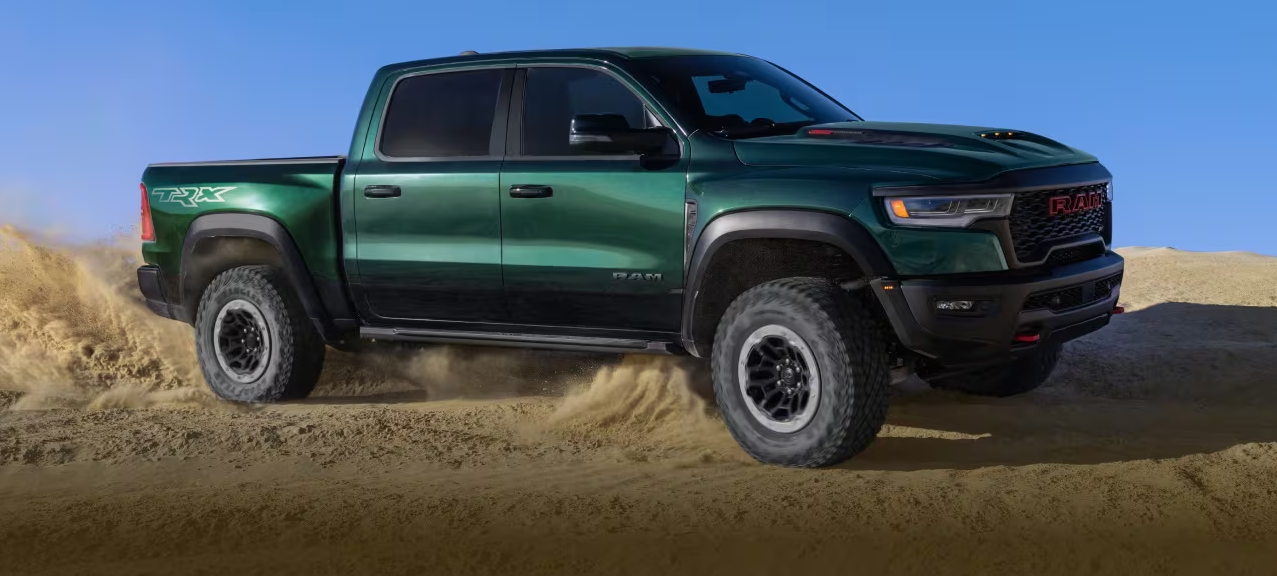
Choosing between America’s two most popular pickup trucks still gives buyers in Westchester County plenty to think about. The 2026 Ram 1500 vs Ford F-150 debate shows two completely different approaches: Ram builds trucks that feel more like luxury SUVs with beds, putting comfort and refinement first. Ford engineers the F-150 around maximum capability and work-ready toughness.
How these different philosophies play out in real-world driving matters way more than what the spec sheets tell you.
2026 Ram 1500 vs Ford F-150: Setting Up a Fair Comparison
Think of this matchup less like finding a clear winner and more like choosing between different truck personalities. The F-150 appeals to buyers who regularly need serious work capability, whether they’re hauling construction materials or towing heavy trailers across New York State. The Ram 1500 targets buyers who want truck capability but won’t give up the comfort they’d expect from a premium sedan. This really shows up in daily driving, especially when you’re commuting through Westchester traffic before heading to job sites or boat launches on weekends.
Both trucks share body-on-frame construction and offer multiple cab configurations, but their execution reveals some fundamental differences. The F-150 focuses on versatility through dozens of trim and option combinations. Ram simplifies the lineup while elevating standard features, betting that most buyers want luxury baked in rather than adding it piece by piece.
Ride Comfort and Cabin Quietness: Where the Ram 1500 Shines
The biggest surprise for first-time Ram 1500 drivers? How un-truck-like it feels. The difference starts with suspension design. Ram uses rear coil springs instead of the leaf springs you’ll find in most pickups, including the F-150. This design choice completely transforms ride quality, especially over broken pavement.
You’ll notice this advantage right away on roads like the Taconic Parkway or Route 9. The Ram absorbs expansion joints and potholes without those harsh impacts that traditional truck suspensions deliver to your spine. The optional air suspension automatically adjusts ride height and firmness based on speed and load. Ford offers similar technology, but Ram’s implementation feels more refined in everyday driving.
Cabin quietness is another Ram strength. The company invested heavily in sound insulation, acoustic glass, and body sealing to create a library-quiet interior at highway speeds. Wind noise around mirrors and door frames gets noticeably reduced compared to the F-150. Engine sound is filtered to provide character without being intrusive.
Interior Refinement and Material Quality
Step inside both trucks and the interior comparison becomes immediately obvious. Ram cabins feature soft-touch materials across the dashboard, real wood or metal accents depending on trim, and thoughtful details like French stitching on seats. The center console looks more like furniture than automotive design, with proper storage bins and quality latching mechanisms.
Ford interiors are functional and well-built, but materials feel more utilitarian. Harder plastics show up in key touchpoints, and the design prioritizes durability over luxury. This works great for work trucks where easy cleaning matters, but if your truck serves as your primary vehicle, the Ram’s upscale cabin creates a much more pleasant daily environment.
Seat comfort particularly favors Ram. Front seats offer extensive adjustment, excellent lumbar support, and available massage functions across multiple trims. Ford seats work fine for shorter drives but lack the contouring that makes Ram seats comfortable on three-hour trips. Rear passengers benefit from Ram’s reclining backrests and surprising legroom in crew cab configurations.
Towing Capacity and Payload: Understanding the Real Numbers
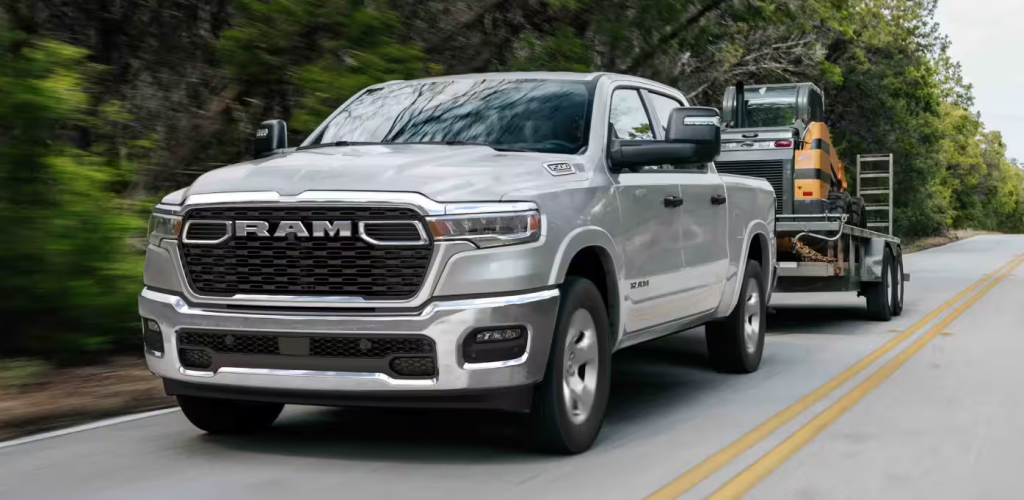
Maximum towing numbers favor the F-150, with properly equipped models reaching up to 13,500 pounds with the 3.5-liter EcoBoost V6. The Ram 1500 tops out at 11,610 pounds for towing and 2,360 pounds for payload. It’s worth noting that Ford’s peak horsepower and torque figures belong to the Raptor R, a specialized off-road model. In a mainstream trim comparison, the gap in power narrows considerably.
Here’s the thing though: maximum numbers require specific configurations most buyers don’t actually choose. When you compare crew cab models with popular engines and four-wheel drive, the towing gap narrows considerably. Most buyers will find either truck handles their boat, camper, or utility trailer without breaking a sweat.
The F-150’s aluminum body construction reduces overall weight, leaving more capacity for cargo. Ram’s steel body adds weight but provides traditional repair advantages for long-term durability concerns.
How Configuration Changes Your Capability
Engine choice dramatically affects capability. Ram’s 3.0-liter Hurricane inline-six serves as the primary towing engine, delivering the highest tow rating in the lineup. The returning 5.7-liter HEMI V8 with eTorque offers traditional V8 character and a maximum tow rating just behind the Hurricane.
Ford offers more engine choices, including turbocharged V6 options delivering impressive power from smaller displacement. The 3.5-liter EcoBoost V6 matches or exceeds HEMI performance while potentially delivering better fuel economy. Ford’s PowerBoost hybrid combines a twin-turbo V6 with electric assist, producing 420 horsepower and 578 lb-ft of torque, for excellent towing and mobile generator capability that Ram simply can’t match.
Axle ratios matter too. Higher numerical ratios like 3.92 improve towing but hurt highway fuel economy. Lower ratios like 3.55 work better for unloaded highway driving. Understanding which ratio your chosen truck includes is essential for matching capability to your actual needs.
Towing Technology That Makes a Difference
Modern towing goes way beyond hooking up and hoping for the best. Both trucks offer advanced features that make towing considerably safer. Trailer sway control actively applies individual brakes and reduces throttle to counteract dangerous side-to-side motion. Integrated brake controllers eliminate aftermarket installations and provide much smoother trailer braking.
Ram’s Trailer Reverse Guidance system simplifies backing up, showing predicted trailer paths right on the center screen. Ford counters with Pro Trailer Backup Assist, which lets you control trailer direction using a dash-mounted knob. Both systems work well once you get past the learning curve.
Camera systems provide crucial visibility around your trailer, showing tire positions during turns, blind spot views when changing lanes, and top-down perspectives when hooking up. These features really matter when you’re navigating tight Westchester shopping center lots or launching boats at crowded ramps.
Technology and Infotainment: Screens, Features, and Daily Usability
The technology comparison heavily favors Ram’s newer Uconnect system. The available 14.4-inch touchscreen dominates the center stack with crisp graphics, intuitive menus, and quick responses. Split-screen functionality lets you view navigation and audio controls simultaneously, and wireless Apple CarPlay and Android Auto work flawlessly.
Ford’s Sync 4 system is competent but less visually impressive. Screen sizes top out at 12 inches in higher trims, and the interface feels busier and takes more practice to master. Voice recognition actually works better in Ford’s system, understanding natural language commands more consistently.
Gauge cluster displays favor Ram, with a fully digital 12.3-inch screen replacing traditional analog gauges in upper trims. The display is customizable and can show navigation directions, performance data, or off-road information depending on driving mode. Ford offers similar digital clusters but with less screen real estate.
Driver assistance technology reaches near parity between both trucks. Adaptive cruise control, lane keeping assist, blind spot monitoring, and automatic emergency braking come standard or available across trims. Ram’s system feels slightly more refined with smoother interventions and fewer false alerts.
Engine Options and Real-World Efficiency
| Spec | 2026 Ford F-150 | 2026 Ram 1500 |
| Engine Options | Six (incl. hybrid) | Four gas engines: 3.6L Pentastar V6, 5.7L HEMI V8, 3.0L Hurricane I-6, 3.0L Hurricane High-Output I-6 |
| Max Horsepower | Max Horsepower: 720 hp (Raptor R only; mainstream models up to 420 hp) | 540 hp |
| Max Torque | Max Torque: 640 lb-ft (Raptor R only; mainstream models up to 578 lb-ft) | 521 lb-ft |
| Transmission | 10-speed auto | 8-speed auto |
| Max Towing | 13,500 lbs | 11,610 lbs |
Ram’s standard 3.6-liter V6 delivers adequate power with decent efficiency around 20 mpg combined. Most buyers choose the 5.7-liter HEMI V8, which provides significantly more power while returning 15-17 mpg in real-world mixed driving.
Ford’s turbocharged EcoBoost engines promise better efficiency than their power output suggests. The 2.7-liter EcoBoost serves as a popular V8 alternative, delivering strong performance with real-world economy in the high teens. The larger 3.5-liter EcoBoost provides near-diesel torque while potentially matching naturally aspirated V6 efficiency when you drive it gently.
Ford’s PowerBoost hybrid introduces a real wildcard. The system combines a 3.5-liter twin-turbo V6 with a 35-kW electric motor for 420 horsepower and 578 lb-ft of torque. The real appeal is onboard power generation through Pro Power Onboard, standard at 2.0 kW and available up to 7.2 kW, that can run job site tools or power your home during outages.
Long-Term Ownership: Reliability, Resale, and Versatility
Ford’s F-150 has dominated truck sales for decades, creating a massive service network and proven track record. Aluminum body repairs concerned early buyers, but most body shops now handle them routinely. EcoBoost reliability has improved significantly after early turbocharger issues were addressed.
Ram reliability improved dramatically in recent generations. The current 1500 shows strong dependability ratings, and Ram’s warranty provides exceptional peace of mind with a 10-Year/100,000-Mile Limited Powertrain Warranty on select 2026 models, one of the strongest coverage packages in the full-size truck segment. The HEMI V8 carries a proven reputation for longevity, often surpassing 200,000 miles with proper maintenance.
Resale values traditionally favor Ford due to market dominance and brand loyalty. However, the gap has narrowed as Ram’s quality attracts more buyers. Limited edition models and well-optioned trucks from both brands hold value well, while basic work configurations depreciate faster.
Which Pickup Wins for Westchester Drivers?
The decision ultimately comes down to what you prioritize. Choose the Ram 1500 if daily comfort, refined driving dynamics, and upscale interiors matter as much as truck capability. Its superior ride quality and quieter cabin make it ideal for buyers who commute regularly while occasionally needing to tow or haul. Families wanting truck versatility without sacrificing sedan-like comfort will appreciate Ram’s approach.
The Ford F-150 makes more sense for buyers needing maximum capability who don’t mind trading some refinement for it. If you regularly tow heavy trailers, need exceptional payload capacity, or want the broadest configuration options, the F-150 delivers. The PowerBoost hybrid deserves serious consideration for anyone who can benefit from mobile power generation.
Experience the Difference at Bill Volz’s Westchester CDJR
At Bill Volz’s Westchester CDJR in Cortlandt Manor, we specialize in helping Westchester County buyers find the right Ram 1500 configuration for their needs. Explore our new Ram 1500 inventory in Cortlandt Manor or browse our complete Ram lineup to see available options. Our family-oriented approach means no pressure, just straightforward guidance based on how you’ll actually use your truck.
Test driving both trucks reveals differences that specifications simply can’t capture. Contact our team today to discover which truck’s strengths align with your priorities. Your next truck should enhance your life, not force compromises you’ll regret every time you climb behind the wheel.
Connect with us


- July 2026
- June 2026
- May 2026
- April 2026
- March 2026
- February 2026
- January 2026
- December 2025
- November 2025
- October 2025
- September 2025
- August 2025
- July 2025
- June 2025
- May 2025
- April 2025
- March 2025
- February 2025
- January 2025
- December 2024
- November 2024
- October 2024
- September 2024
- August 2024
- July 2024
- June 2024
- May 2024
- April 2024
- March 2024
- February 2024
- January 2024
- December 2023
- November 2023
- October 2023
- September 2023
- August 2023
- July 2023
- June 2023
- May 2023
- April 2023
- March 2023
- February 2023
- January 2023
- December 2022
- November 2022
- October 2022
- September 2022
- August 2022
- July 2022
- June 2022
- May 2022
- April 2022
- March 2022
- February 2022
- January 2022
- December 2021
- November 2021
- October 2021
- September 2021
- February 2017
- January 2017
- December 2016
Archives
- Advice
- Challenger Tips
- Chrysler
- Chrysler Features
- Chrysler Service Tips
- Chrysler Tips
- Dodge
- Dodge Charger
- Driving Tips
- Electric Vehicles
- Financing
- Jeep Compass
- Jeep Lineup
- Jeep Owner Tips
- Jeep Tips
- Jeep Wrangler
- Local
- Local Cafes
- Local Shops
- Mopar
- Ram Trucks
- Service Tips
- Uncategorized
- Used Vehicles
- Vehicle Upkeep
- Wagoneer