




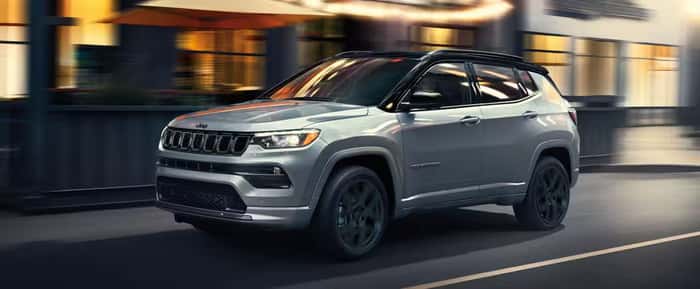
If you’re considering the Jeep Compass, you’ll want to know about its reliability before committing to such a big purchase. This compact SUV attracts everyday drivers with its city-friendly size while still offering the off-road agility Jeep is famous for. Our team at Bill Volz Westchester in Cortlandt cuts through the hype and looks at how these vehicles hold up over time, including repair patterns and longevity, so you can decide if a Compass deserves a spot in your driveway.
Jeep Compass Reliability Overview
The Compass has struggled with reliability, but newer versions show solid improvement. RepairPal rates the 2024 model at 4 out of 5, landing it in 11th place among 26 compact SUVs. This puts it slightly above average compared to similar vehicles.
Looking at J.D. Power’s numbers, the 2022 Compass scored a 77 out of 100 for reliability. This is an average score, but Jeep has fixed many of the issues that hampered earlier models. Unexpected repair visits are rare, with Compass owners only making unplanned trips to mechanics about 0.3 times yearly, beating the class average of 0.4. Major problems happen about 13% of the time — slightly worse than the 12% class average.
Common Jeep Compass Issues and the Cost of Ownership
Every vehicle has its quirks, and the Compass isn’t an exception. Annual repair costs for the Compass average $526, a pleasant surprise compared to the $591 typical for this class. We’ve talked with dozens of owners who find that routine maintenance costs are lower than expected, especially compared to other small SUVs they’ve owned.
Be consistent with basic maintenance, such as oil changes, tire rotations, and brake checks, to head off bigger problems. Remember that repair costs vary based on where you live and which model year you have — a 2018 model will hit your bank account differently than a 2024, and shops in Manhattan charge double what you’d pay in rural Pennsylvania for the same work. Many owners find that setting aside $45-$50 monthly covers most maintenance needs without financial surprises.
Frequent Problems Faced by Jeep Compass Owners
The 2018 Compass had some electrical issues. Drivers found themselves stranded with battery troubles, and engines sometimes quit without warning. Go back to 2014 models and you’ll find water woes where roof and sunroof leaks sent rain trickling into cabins. Wet seats can be inconvenient, but moisture can fry electronics and grow mold if ignored. Earlier model years, such as 2011, had problems with the continuously variable transmission overheating and sometimes failing, which, at $1,700, was an expensive repair. Suspension issues on 2008 Compasses cost around $480.
Impact on Long-Term Ownership
Long-term owners have mixed feelings about the Compass’ reliability. With decent care and timely maintenance, these SUVs can become faithful companions for a decade or more. Many hit 200,000 miles with regular attention, enough for 80 cross-country trips or 15 years of daily commutes.
Value retention isn’t stellar for the Compass, however. A Compass typically sheds 47% of its value in five years, faster than some competitors, such as the Honda CR-V or Toyota RAV4. That’s bad news for sellers who hoped their investment would hold better, but absolute gold for bargain hunters who can score nearly half-price deals on gently used models. This depreciation pattern affects long-term ownership calculations significantly, especially if you’re the type to trade in your vehicle every few years.
Most Reliable Jeep Compass Years
If you’re looking for a used Jeep Compass, some years outshine others, and knowing which ones to target can save you thousands in future repairs. The 2024 model currently leads the pack, benefiting from Jeep’s continuous tweaking and fixes to previous trouble spots. With upgraded electrical systems and more robust engine components, the newest models generate dramatically fewer service bulletins than earlier generations.
The 2020 Compass also gets an enthusiastic thumbs-up from owners. If your budget demands older models, look at 2009 and 2010 versions, which avoided many of the problems that plagued other production runs. These model years are perfect if you want decent reliability without breaking the bank or becoming best friends with your mechanic.
Safety and Longevity of the Jeep Compass
Newer Compass models are safer, too. The National Highway Traffic Safety Administration gave 2024-2025 models solid marks: four stars for front crashes, five stars for side impacts, and three stars for rollovers, which averages out to a respectable four-star overall rating.
Safety tech abounds in current models with over 85 standard and optional safety features. Blind-spot monitoring keeps you aware of hidden vehicles, rear cross-path detection watches your back during reverse maneuvers, and the ParkSense system helps you avoid parking lot dings. These gadgets not only protect passengers but also prevent accidents that would hurt reliability scores and resale value.
Is the Jeep Compass the Right Choice for You?
The Jeep Compass offers a distinctive combination of city-friendly dimensions and off-road capability. The 2025 Compass packs a punch with a class-leading 200 hp and 221 lb-ft of torque, outmuscling rivals such as the Mazda CX-5 (187 hp) and leaving the Honda HR-V (158 hp) in the dust.
Starting at $26,900, it’s cheaper than a Ford Bronco Sport ($29,795) and far less expensive than luxury options like the Volvo XC40 ($40,650). Yes, you could save some money with a Kia Seltos ($24,690) or Subaru Crosstrek ($25,810). Fuel efficiency of 24 mpg in the city and 32 mpg on the highway puts it on par with most competitors.
Your decision boils down to your priorities. If you want daily comfort and weekend trail ability and can schedule regular maintenance, then a Compass might fit your life perfectly.
Test-Drive a Jeep Compass at Bill Volz Westchester Today
Our Cortlandt team can set you up with a test-drive so you can feel it yourself. Brochures and reviews only tell half the story — the rest happens when you grip the steering wheel and hit the road.
Image from jeep.com
Connect with us


- July 2026
- June 2026
- May 2026
- April 2026
- March 2026
- February 2026
- January 2026
- December 2025
- November 2025
- October 2025
- September 2025
- August 2025
- July 2025
- June 2025
- May 2025
- April 2025
- March 2025
- February 2025
- January 2025
- December 2024
- November 2024
- October 2024
- September 2024
- August 2024
- July 2024
- June 2024
- May 2024
- April 2024
- March 2024
- February 2024
- January 2024
- December 2023
- November 2023
- October 2023
- September 2023
- August 2023
- July 2023
- June 2023
- May 2023
- April 2023
- March 2023
- February 2023
- January 2023
- December 2022
- November 2022
- October 2022
- September 2022
- August 2022
- July 2022
- June 2022
- May 2022
- April 2022
- March 2022
- February 2022
- January 2022
- December 2021
- November 2021
- October 2021
- September 2021
- February 2017
- January 2017
- December 2016
Archives
- Advice
- Challenger Tips
- Chrysler
- Chrysler Features
- Chrysler Service Tips
- Chrysler Tips
- Dodge
- Dodge Charger
- Driving Tips
- Electric Vehicles
- Financing
- Jeep Compass
- Jeep Lineup
- Jeep Owner Tips
- Jeep Tips
- Jeep Wrangler
- Local
- Local Cafes
- Local Shops
- Mopar
- Ram Trucks
- Service Tips
- Uncategorized
- Used Vehicles
- Vehicle Upkeep
- Wagoneer