




Ram trucks are among the most sought-after pickup trucks in the U.S., thanks to their stylish and rugged looks, incredible work capabilities, and outstanding reliability. If you’re considering purchasing a new truck or are a Ram fan already, you may be interested in learning more about these awesome trucks, such as how they evolved over the years and where Ram makes them today. Check out this guide from our team at Bill Volz Westchester in Cortlandt, New York, to discover the origins of Ram trucks and why our dealership is the best place to purchase your new dream vehicle.
A Brief History of Ram Trucks
When Dodge launched its Ram trucks for the first time in 1981, they carried the Dodge Ram name. These trucks had a hood ornament depicting a ram’s head, which continues to serve as the mascot of the model today.
The earliest Dodge Ram trucks had different designations, starting with the letter “D,” indicating two-wheel drive, or a “W,” denoting four-wheel drive. Following the letter, Dodge assigned a number to reflect how much weight the truck could haul. For example, “150” meant half a ton, “250” indicated three-quarters of a ton, and “350” represented one ton. So, a Ram D150 would be a half-ton truck with two-wheel drive.
In terms of power, the first-generation Dodge Rams were quite impressive. There were three engines for truck buyers to choose from: a 3.7-liter slant-six with 95 horsepower, a 5.2-liter V-8 with 140 horsepower, and a 5.9-liter V-8 with 170 horsepower. Dodge didn’t make any significant updates to the trucks until 1988 when an electronic fuel-injection system became available for the 5.2-liter V-8. Dodge added a new fuel-injection 3.9-liter V-6 with 125 horsepower to the lineup a year later. It also upgraded the 5.9-liter V-8 with fuel injection, which increased its output to 190 horsepower.
Dodge Ram trucks reached their second generation in 1994. That year saw major changes, including the introduction of new models that became more popular than their predecessors. Dodge made the trucks more appealing by giving them a rugged exterior, a car-like interior, and new engine upgrades. And the brand gave them new model designations, labeling the half-ton model the “1500,” the three-quarter-ton model the “2500,” and the one-ton version the “3500.”
In 2009, Dodge announced the end of its partnership with Ram. So Ram became a stand-alone brand, and its trucks have simply been Ram trucks ever since. Many auto enthusiasts and Ram fans were worried the split would hurt the company, but there was no reason for concern. Since separating from Dodge, Ram has been focusing on building its image and vision and producing better pickup trucks each year. Now in their fifth generation, Ram trucks have consistently been in the top three spots for truck sales in the U.S.
Where Are Ram Trucks Made?
None of the modern pickup trucks on the market today are completely built in the U.S., and Ram trucks are no exception. Although the U.S. and Canada produce 58% of the Ram 1500’s parts, the rest of its components come from the Saltillo Truck Assembly Plant in Mexico. Since the federal government imposed the American Automobile Labeling Act, auto manufacturers must display the assembly location and percentage of parts made in North America on the window stickers of all their light-duty vehicles.
The Sterling Heights Assembly Plant in Sterling Heights, Michigan, now exclusively produces every fifth-generation Ram 1500. The history of this manufacturing plant dates to 1953 when Chrysler Corporation opened it to build missiles. After that, the U.S. Army purchased and operated the factory for years before selling it to Volkswagen. In 1983, the German automaker sold the plant back to Chrysler. Chrysler later wanted to use it to manufacture pickup trucks, so it spent $1.49 billion to retool the facility.
The Saltillo Truck Assembly Plant in Mexico produces all Ram’s heavy-duty and commercial trucks, including the Ram 2500, 3500, 4500, and 5500. Unlike light-duty pickups, heavy-duty trucks don’t need to disclose how much of their parts come from the U.S. or Canada, so most people don’t know what percentage of these trucks Ram produces in North America.
The Saltillo Truck Assembly Plant is an expansive manufacturing plant that spans about 49 acres. It boasts two engine assembly centers and a body-stamping facility. Stellantis, the company that currently owns the Ram brand, revealed that the Saltillo plant manufactures all the 5.7-liter HEMI V-8 and 6.4-liter HEMI V-8 engines and some of the 3.6-liter Pentastar V-6 engines of Ram trucks. The factory will also build the upcoming 3.0-liter Hurricane turbo-six engines.
If you’re wondering where Ram builds the 1500 Classic, it depends on which cab style you choose. The Saltillo Truck Assembly Plant manufactures all two-door models and some four-door models of this fourth-generation Ram truck. The Warren Truck Assembly Plant in Warren, Michigan, where Ram built its fourth-generation trucks, produces every Quad Cab and some Crew Cab models.
Regardless of which Ram truck model you own or plan to buy, you can find out where Ram is manufactured it by simply checking its vehicle identification number (VIN). Ram produces vehicles with a VIN starting with a one, four, or five in the U.S. It manufactures those beginning with a two in Canada, while those starting with a three come from Mexico.
Find Your Dream Ram Truck at Bill Volz Westchester
If you reside in Cortlandt, New York, and want to know if Ram trucks can meet your expectations, consider stopping by Bill Volz Westchester. Our dealership is the go-to place for truck buyers in the Cortlandt area looking for the best deals on Ram trucks. We not only have a wide selection of new and used Ram models for you to choose from, but we also offer competitive prices and fantastic vehicle specials to help you save money. Explore our Ram inventory now to find your perfect match, then contact us to schedule a test drive.
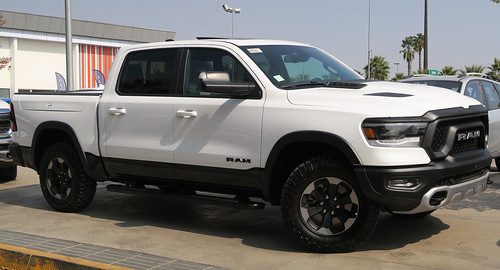
Photo Credit: Ram 1500 Hemi Rebel 2019 by RL GNZLZ is licensed with CC BY-SA 2.0
Connect with us


- June 2026
- May 2026
- April 2026
- March 2026
- February 2026
- January 2026
- December 2025
- November 2025
- October 2025
- September 2025
- August 2025
- July 2025
- June 2025
- May 2025
- April 2025
- March 2025
- February 2025
- January 2025
- December 2024
- November 2024
- October 2024
- September 2024
- August 2024
- July 2024
- June 2024
- May 2024
- April 2024
- March 2024
- February 2024
- January 2024
- December 2023
- November 2023
- October 2023
- September 2023
- August 2023
- July 2023
- June 2023
- May 2023
- April 2023
- March 2023
- February 2023
- January 2023
- December 2022
- November 2022
- October 2022
- September 2022
- August 2022
- July 2022
- June 2022
- May 2022
- April 2022
- March 2022
- February 2022
- January 2022
- December 2021
- November 2021
- October 2021
- September 2021
- February 2017
- January 2017
- December 2016
Archives
- Advice
- Challenger Tips
- Chrysler
- Chrysler Features
- Chrysler Service Tips
- Chrysler Tips
- Dodge
- Dodge Charger
- Driving Tips
- Electric Vehicles
- Financing
- Jeep Compass
- Jeep Lineup
- Jeep Owner Tips
- Jeep Tips
- Jeep Wrangler
- Local
- Local Cafes
- Local Shops
- Mopar
- Ram Trucks
- Service Tips
- Uncategorized
- Used Vehicles
- Vehicle Upkeep
- Wagoneer